
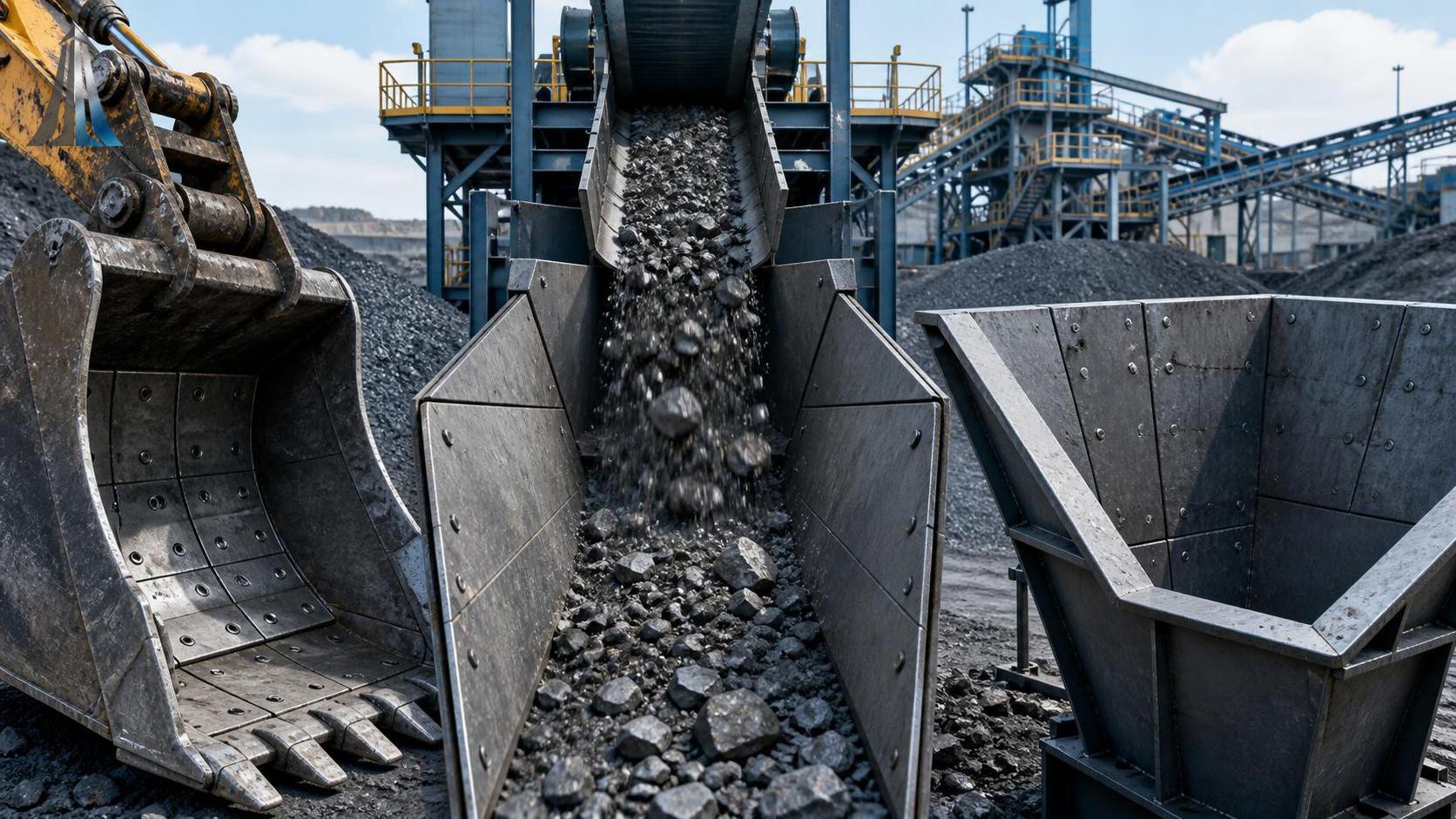
Maintenance cost in mining usually rises from the same chain of events: liners wear out earlier than expected, buckets or chutes lose thickness, shutdowns extend because replacement parts need fitting work, and adjacent components start failing after abrasion changes the original geometry. Wear Resistant Steel Plate is often selected to interrupt that chain at the material level. When the plate grade, hardness range, thickness, and fabrication route are matched to the duty, the result can be fewer changeouts, more stable maintenance planning, and lower indirect cost around labor, crane time, and production loss.
In abrasive service, the plate is rarely judged only by its purchase price per ton. A lower-cost mild steel liner may look attractive in a quotation, but if it must be replaced several times within the period that a harder plate remains serviceable, the installed cost can move in the opposite direction. Mining equipment makes this visible very quickly in hopper liners, dump truck bodies, transfer chutes, screen side plates, feeder liners, dozer blades, wear strips, and excavator bucket components. Once access is difficult or shutdown windows are tight, the value of service life often exceeds the difference in initial material cost.
Where maintenance cost actually comes from
Abrasion in mining is not uniform. Fine ore sliding down a chute produces different wear from large, sharp rock impacting at the feed point. Wet slurry can carry fines into corners and accelerate localized thinning. In some circuits, wear is combined with moderate impact, while in others impact is severe enough that a very hard plate may crack if the grade is chosen without enough toughness. This matters because maintenance cost is shaped by failure mode. Gradual thinning can usually be planned around. Cracking at welds, edge breakout, or distortion from poor fabrication can force unplanned repair even when the plate itself has high nominal hardness.
For that reason, Wear Resistant Steel Plate should be considered as part of a wear system rather than as a single line item. The supporting structure, backing plate, weld procedure, bolt layout, segment size, and access for handling all affect whether the plate lowers cost in practice. A harder plate installed in pieces that are too large for safe replacement may reduce material wear but increase downtime during shutdown. A thinner sheet that can be changed quickly may sometimes make better economic sense than a thicker one that extends life but complicates installation.
Why harder steel can reduce total spend
The basic principle is simple: a steel plate designed for abrasive service generally resists material loss better than standard structural carbon steel under the same conditions. Many wear plate specifications are discussed by hardness level, often in Brinell ranges such as 400, 450, or 500 class material. Higher hardness can improve abrasion resistance where the dominant mechanism is sliding or gouging wear, but the gain is only useful if the plate still tolerates the impact, bending, and welding required by the application.
In a chute liner or hopper wall, longer wear life may reduce the frequency of confined-space work, lifting operations, and line stoppages. In truck bodies or bucket liners, the benefit can include slower loss of original profile, which helps maintain material flow and loading behavior. In screen or feeder applications, preserving flatness and edge integrity may avoid secondary damage to fasteners and frames. These are ordinary maintenance drivers, and they are often more expensive than the plate itself once labor and downtime are added.
There is also a stockholding effect. If the wear part inventory is based on frequent replacement of conventional plate, spare quantities can become large and uneven across sites. A more durable material may allow fewer emergency purchases and less storage of oversized backup stock, provided wear life is predictable enough to support planning. That predictability matters. If plate performance varies because the wrong grade is used in mixed wear conditions, inventory discipline is lost and cost savings disappear.
Application conditions that change the right choice
Wear Resistant Steel Plate is often grouped into one category in procurement discussions, but mining duty is too varied for that shortcut. Ore type, particle size distribution, moisture, drop height, material velocity, and equipment geometry all influence plate selection. A transfer chute handling dry fines may favor a very hard grade because sliding abrasion dominates. A jaw crusher liner support or a bucket lip area may call for more caution because repeated impact can become the deciding factor. In some cases, a lower hardness grade with better toughness and fabrication tolerance may produce lower maintenance cost over time than a harder, more brittle option.
Thickness should also be judged carefully. Increasing thickness can extend life, yet it changes weight, handling method, weld volume, and fit-up time. In mobile equipment, extra weight may also affect payload or energy use. On fixed plant equipment, heavier liners may require stronger support members or different lifting points during shutdown. The cheapest long-term arrangement is not always the thickest plate available; it is the one that fits the wear rate, replacement interval, and maintenance access without creating a new bottleneck.
Fabrication details are often where cost savings are won or lost
Many maintenance problems blamed on material quality begin in processing. Wear plates are commonly cut by plasma, laser, oxy-fuel, waterjet, or mechanical methods depending on thickness and job requirements. Each route has tradeoffs. Thermal cutting is efficient, but heat-affected zones and cut-edge quality should be controlled because poor edges can become crack initiation points in impact service. Hole quality matters as well. If bolt holes are out of tolerance or heavily hardened around the edge, field assembly may slow down or require rework during a shutdown window.
Bending also deserves attention. A plate with high hardness can still be formed, but bend radius, rolling direction, thickness, and workshop practice need to align with the mill recommendation or established fabrication experience. Trying to force a tight bend on a thick wear plate may lead to surface cracking, especially near cut edges. That defect may not fail immediately, but under vibration and impact it can shorten service life and increase inspection frequency.
Welding is another common source of hidden maintenance cost. Preheat requirements, hydrogen control, consumable selection, and weld placement should reflect both hardness level and structural demand. Overwelding a liner can introduce residual stress and distortion. Undersized intermittent welds may break loose under impact and allow the liner to flex. If the plate is intended to be sacrificial, the attachment method should make replacement practical. In some locations, bolted liners or plug-welded wear pads are easier to change cleanly than long continuous welds that must be gouged out on site.
Common misjudgments during purchasing
The first mistake is treating all abrasive wear as the same. A request for “400 HB wear plate” may look specific, yet it leaves too much unresolved if impact level, temperature, fabrication needs, and expected service interval are not described. The second mistake is comparing quotations without accounting for processing scope. One offer may include cut-to-size parts, formed sections, hole machining, edge prep, and identification marks for installation sequence, while another may be only raw plate. Material price alone does not represent installed cost.
Another frequent problem is ordering to nominal thickness without a wear allowance strategy. If the service condition causes concentrated attack at a feed point or corner, a uniform plate thickness across the entire liner area may waste material in low-wear zones and still fail early where wear is highest. Segmenting the liner layout, adding localized doubler sections, or using replaceable wear strips in selected areas can sometimes reduce overall consumption and simplify future maintenance. That approach requires more engineering up front, but it can produce a cleaner shutdown plan later.
Lead time assumptions also cause expensive decisions. Thick wear plate, nonstandard dimensions, or complex formed parts may not be available on the same schedule as commodity structural plate. If a site waits until a liner is near failure before ordering a replacement, the true comparison is no longer between two steel grades. It becomes a comparison between a planned replacement and an emergency shutdown with expedited logistics and rushed fabrication. In mining, those two situations rarely carry the same cost.
Transport and handling matter more than they seem
Wear Resistant Steel Plate usually reaches the site as heavy, high-value material that can be damaged by poor stacking, chain marks, or uncontrolled moisture exposure during transit and storage. Surface scratches are not always critical, but deep edge damage, bent corners, or mixed part identification can add field delays. If pre-cut liner kits arrive without clear part numbering or orientation marks, installation teams may spend valuable outage time sorting components and correcting fit issues.
For remote projects, transport planning can influence the preferred plate size. A single large liner might reduce workshop seams, yet it may exceed local handling limits or require special lifting arrangements underground or in a restricted plant area. Smaller segments can reduce handling difficulty, though too many joints may increase fastener count and wear leakage lines. The right balance depends on site access, crane capacity, and whether replacement is done during a full shutdown or under a short intervention window.
Installation choices that affect future maintenance
Wear plate is often installed under time pressure, which is exactly why layout discipline matters. Mating surfaces should be clean enough to avoid rocking points under the liner. Gaps that trap fines can create accelerated erosion behind the plate and undermine support. If dissimilar materials are combined, local stress concentration should be considered around holes and welds. In vibrating equipment, fastener retention method and inspection access are part of the design, not an afterthought.
Replaceability should be visible in the layout. If one worn section forces removal of multiple surrounding plates, shutdown duration usually grows with every cycle. By contrast, a liner arrangement that isolates the highest-wear zones into manageable replaceable parts may shorten each intervention even if the initial fabrication package is more detailed. This is one reason mining operations often prefer practical modularity over a theoretically cleaner full-sheet design.
- Feed impact zones may justify separate sacrificial pieces because they usually wear faster than side walls and often need earlier access.
- Long chute sections can benefit from installation marks or directional numbering so alignment is repeatable during later maintenance.
- Where bolt-on liners are used, recess depth and seating quality should be checked carefully; proud fastener heads can become wear points and disturb material flow.
Maintenance planning should start before the first plate is installed
Cost control improves when wear is monitored in a consistent way. In some operations, ultrasonic thickness checks or scheduled visual mapping can show whether the selected plate is wearing uniformly or failing at a local hotspot. If wear patterns indicate turbulence, material hang-up, or impact concentration, redesigning the geometry may deliver more value than simply upgrading to a harder grade. Steel selection and liner design are linked; one cannot fully compensate for flaws in the other.
It is also useful to distinguish between wear life and serviceable life. A liner may still have metal thickness left, yet no longer perform well because shape loss changes ore flow, exposes welds, or increases carryback. Waiting for absolute end-of-life can therefore be expensive. Planned replacement at the right point may lower total maintenance cost by preventing secondary damage to the structure behind the liner.
Inspection records become more valuable when they include operating context rather than thickness alone. Material changes, moisture shifts, screen sizing adjustments, and production surges can all alter wear behavior. Without that context, a plate may be judged unfairly as underperforming when the actual cause is a change in duty. When the operating condition is stable and documented, comparisons between different Wear Resistant Steel Plate grades become more meaningful.
When a wear plate upgrade may not reduce cost
There are cases where a higher-grade plate does not improve economics. If the equipment fails primarily from impact fracture, severe deformation, or structural fatigue, hardness alone will not solve the problem. If maintenance access is so limited that replacement always requires a major shutdown regardless of plate life, the main opportunity may lie in redesigning access or liner segmentation. If the worn part is inexpensive and changed during another planned maintenance task, premium material may offer little practical advantage.
Cost can also rise if the chosen plate creates fabrication bottlenecks. A very hard plate that is difficult to form, drill, or weld using available workshop capability may introduce delays, scrap, or field modifications. In that situation, a slightly lower hardness material with more reliable processing may perform better over the full life cycle. The correct decision depends on balancing wear resistance with manufacturability and replacement method.
Mining maintenance budgets are often strained by repetition rather than by one dramatic failure. That is why Wear Resistant Steel Plate can be effective: it addresses recurring loss mechanisms at a basic level, provided the grade, thickness, fabrication, transport, and installation details all match the actual duty. When those conditions are treated seriously, maintenance cost tends to become more predictable, and predictability is often where the largest operational savings begin.
Recent Articles
 How to Choose Stainless Steel Plate Grades for Corrosion and Fabrication Needs
 Cold Rolled Steel Plate: Key Selection Criteria for Forming and Surface Finish
 When Wear Resistant Steel Plate Lowers Maintenance Cost in Mining
 Pressure Vessel Steel Plate Standards That Matter for Export Orders
 What Causes Surface Cracks in Steel Wire Rod During Rolling
 How to Choose Duplex Stainless Steel Pipe for Chloride Service
Please give us a message