
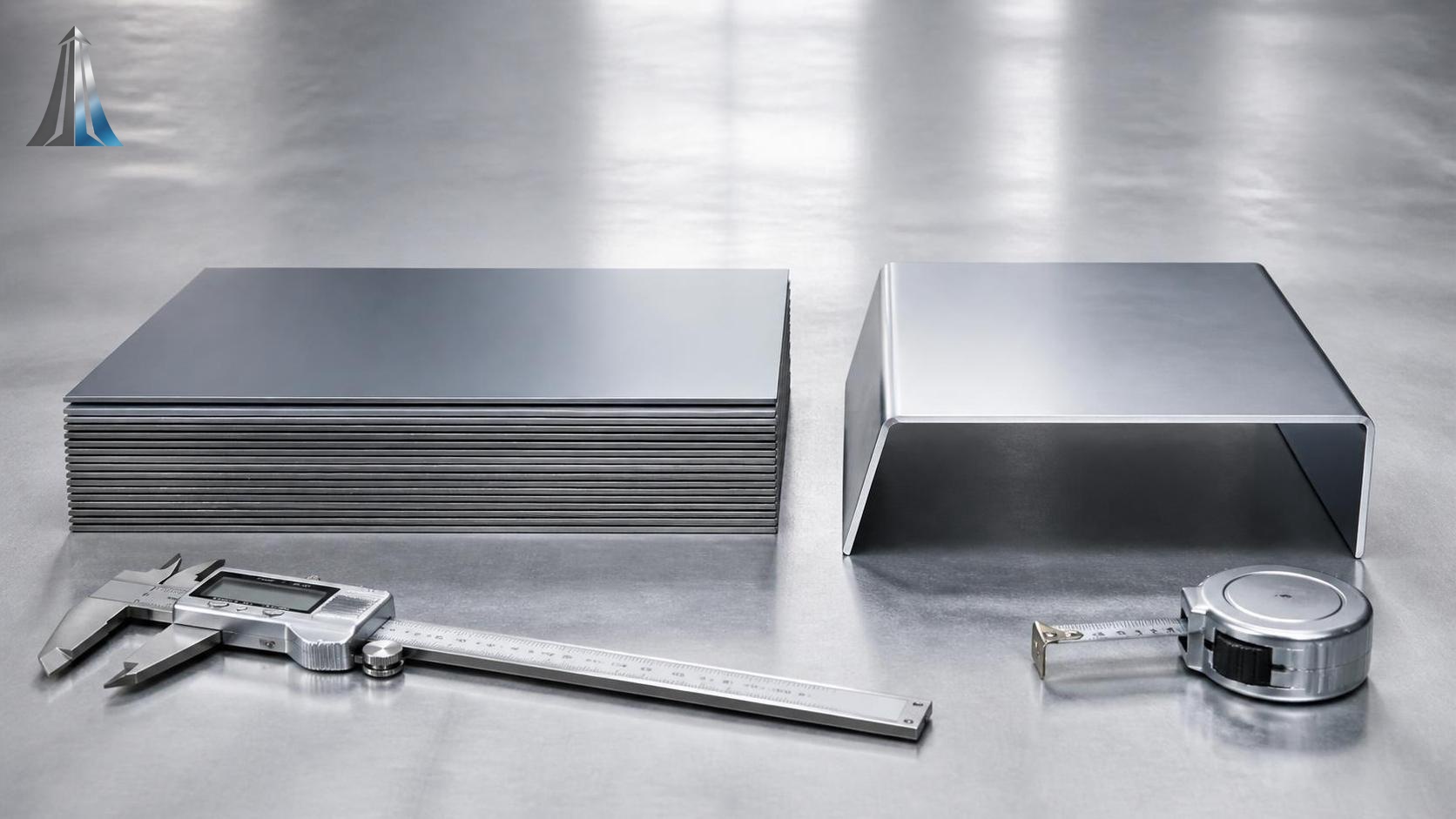
If you are comparing options for Cold Rolled Steel Plate, the real question is usually not “which plate is best,” but “which plate will run cleanly through my process and still meet the final appearance requirement.” That is where many evaluations go off track. A sheet that looks fine on paper can still crack in bending, show stretcher strain after forming, reject paint unevenly, or create trouble in welding and assembly. The right choice comes from matching grade, thickness tolerance, surface condition, and delivery condition to the way the material will actually be cut, formed, joined, and finished.
For technical evaluation, two issues tend to matter most: how the material behaves during forming, and how the surface performs afterward. Everything else supports those two outcomes. If either one is misread at the selection stage, the cost usually appears later as scrap, rework, coating defects, unstable dimensions, or customer complaints about appearance.
Start with the end use, not the steel name
A common mistake is to begin with a familiar grade and then try to force it into every application. In practice, cold rolled products need to be screened by process route and visual expectation first. A cabinet panel, an electrical enclosure, a stamped bracket, and a decorative interior component may all be described as cold rolled steel parts, but they do not ask the same thing from the material.
If the part will be deeply drawn, repeatedly bent, embossed, or shaped with tight radii, formability is the first filter. If the part will stay visible after painting, powder coating, laminating, or direct use, then surface finish moves to the front of the decision. If the part is hidden and only needs stable flatness and dimensional precision for assembly, you can often make a more economical choice.
That sounds obvious, but in real sourcing work this distinction is often blurred. Teams sometimes specify surface quality that is higher than needed for hidden parts, while underestimating the forming demands of simple-looking geometry. The result is paying extra in the wrong place and still getting production issues.
Cold Rolled Steel Plate for forming: what deserves close attention
When people say a plate is “good for forming,” they often mean different things. Some mean it bends without cracking. Others mean it draws evenly. Others mean it springs back predictably. These are related, but not identical.
The first thing to check is the forming severity. Ask a few direct questions:
- Is the part mainly bent, or does it involve stretching and drawing?
- What is the tightest inside bend radius relative to thickness?
- Is the forming done in one hit or in several stages?
- Will the part be flattened, re-struck, or corrected after forming?
- Is surface marking from tooling acceptable or not?
If your operation is mostly simple bending, many standard cold rolled grades may work if thickness consistency is controlled. But once the shape includes deeper draws, stretched corners, bead features, or multiple forming steps, grade selection becomes more sensitive. In those cases, elongation, yield behavior, and strain distribution matter far more than buyers sometimes expect.
Another point that gets missed is directional behavior. Rolling direction can affect bend performance and appearance after forming. If a design uses narrow bend radii, it is worth checking whether the bend line orientation relative to rolling direction could change the risk of edge cracking or visible strain marks. On jobs with tight cosmetic standards, this is not a small detail.
A short version: if the part geometry is demanding, do not approve material based only on tensile strength and nominal thickness. Review the forming route and request supporting mill data or production trial confirmation.
Thickness tolerance and flatness are not secondary issues
Many evaluation teams focus on mechanical properties and surface designation, then treat thickness tolerance as a standard box to tick. That can create problems in stamping, laser cutting, press brake setup, and final assembly.
Stable thickness improves more than dimensional consistency. It also affects forming force, springback variation, weld fit-up, and how uniformly a coated surface appears after fabrication. In thin-gauge applications, even small variation can change the feel of the entire production run.
Flatness matters in a similar way. A plate with acceptable chemistry and strength can still cause feeding problems, inconsistent part geometry, or visual distortion on large panels if flatness is poor. This becomes especially visible on fabricated parts used in doors, panels, cabinets, cladding support elements, and exposed industrial housings.
For that reason, a practical evaluation should include:
- Nominal thickness and actual tolerance requirement
- Flatness expectation for the intended cutting and forming method
- Width and length tolerance relevant to nesting or assembly
- Whether the part will be appearance-sensitive after fabrication
These points are rarely the most glamorous part of the specification, but they often decide whether production runs smoothly.
Surface finish: what “good surface” really means
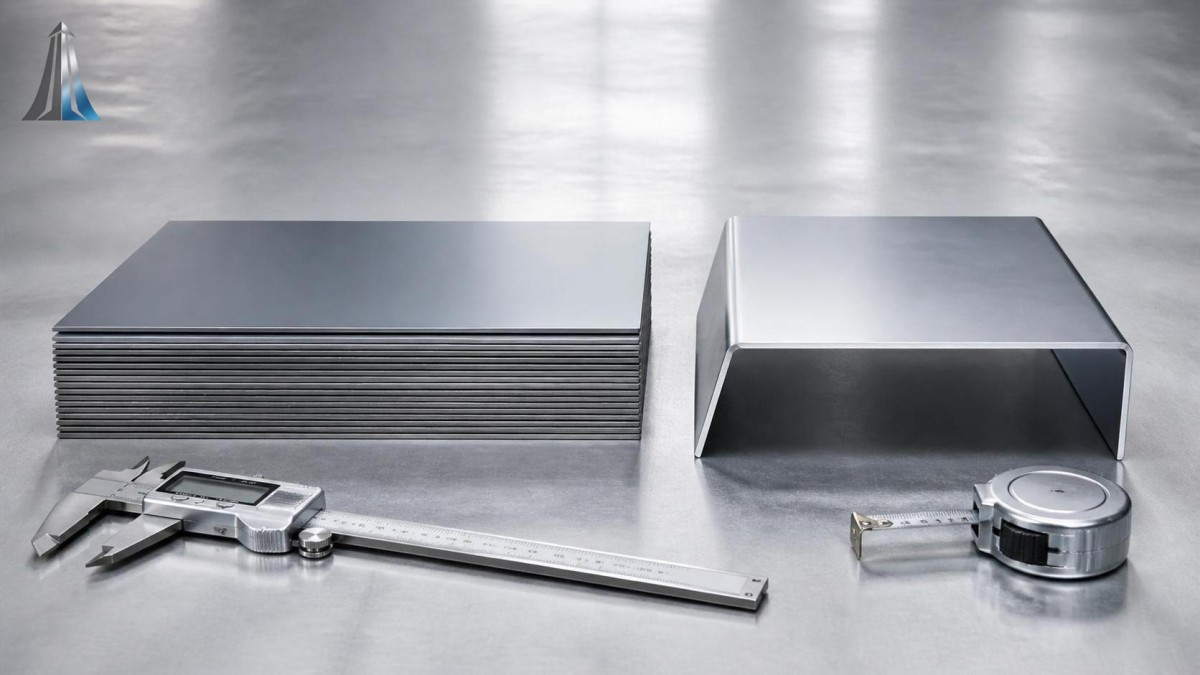
For visible parts, the surface condition of Cold Rolled Steel Plate is often the difference between a smooth downstream process and repeated rejection. A technically acceptable plate can still fail the customer’s expectation if the surface shows roll marks, minor pits, oil inconsistency, scratches, waviness, or defects that become obvious after paint or powder coating.
This is where experienced evaluators usually separate functional surface from appearance-grade surface. If the part will be hidden after fabrication, some minor visual imperfections may be acceptable. If it will be painted in a matte industrial system, the tolerance for substrate variation may be wider. But if the part will receive a glossy coating, film lamination, or thin decorative finish, the substrate quality needs much tighter review.
One frequent misconception is that coating will hide everything. It does not. In many cases, coating reveals more than it conceals. Subtle waviness, shallow dents, and fine scratches can become easier to see after finishing, especially under angled light.
When checking surface suitability, consider:
- Whether the final part is exposed or hidden
- Type of coating or finishing process to be used
- Sensitivity to oil residue, cleaning marks, and handling scratches
- Whether both sides need the same visual standard
- Whether the part will be formed before or after surface-critical inspection
If appearance matters, sample approval should be based on the actual finishing route whenever possible. Looking at bare steel alone is often not enough.
Do not separate forming and finish in the evaluation
In real production, forming performance and surface finish are connected. A plate can form well but pick up tool marks too easily. It can have a clean original surface but show visible strain patterns after drawing. It can pass raw material inspection and still become visually unstable after bending and coating.
This is why the best evaluations are process-linked, not just material-linked.
For example, if you are sourcing for electrical cabinets or appliance-type panels, the steel needs to hold dimensional accuracy during punching and bending, but it also needs a surface that stays consistent after pretreatment and powder coating. If you focus only on forming, cosmetic rejection may appear at the final stage. If you focus only on appearance, you may end up with cracking or springback during fabrication.
The more visible the end product, the more important it is to run a sample through the full chain: cutting, forming, joining if needed, surface treatment, and final visual review.
Questions worth asking the supplier before approval
A technical evaluator does not need a long brochure. What helps is clear, usable information.
- What grade and delivery condition are being offered for this application?
- What thickness and flatness tolerance can be maintained consistently, not just nominally?
- Is the surface intended for general fabrication or appearance-sensitive use?
- Can the supplier support trial quantities before volume commitment?
- Can the material be supplied with downstream processing such as cutting, punching, or bending if that reduces handling risk?
These questions matter because steel procurement is rarely just about chemistry. Supply consistency, packaging, handling, and processing support also affect final quality. For buyers working across mixed sizes or small-batch projects, a supplier with flexible loading and processing capability can remove practical bottlenecks that do not show up in the mill certificate.
That is one area where a trading and processing company like Summit Metal Group Co., Ltd. can be relevant. In cross-border projects, especially in Southeast Asia and nearby export markets, the ability to combine sourcing with cutting, punching, bending, welding, and mixed-size container loading may simplify qualification and reduce secondary handling. It does not replace technical validation, but it can make the supply model more workable for real fabrication schedules.
Where people often choose the wrong plate
Some errors repeat often enough that they are worth calling out directly.
One is buying on strength class alone. Higher strength may sound safer, but in forming-heavy parts it can increase springback and reduce process stability if the part was designed around a more formable material.
Another is assuming all cold rolled surfaces are interchangeable for coating. They are not. Surface cleanliness, defect level, and texture consistency influence pretreatment and final finish quality.
A third is approving based on a flat sample cut from a full sheet, without testing the real forming sequence. Many problems only show up after the steel is bent, drawn, or welded.
And then there is over-specification. If the part is non-visible and lightly formed, demanding premium appearance quality may simply add cost without improving field performance.
When Cold Rolled Steel Plate may not be the best choice
Cold rolled steel is often selected for its dimensional precision and smoother surface, but it is not the answer to every requirement. If corrosion exposure is high and no reliable coating system is planned, galvanized or other protected products may be more appropriate. If the design requires very aggressive deep drawing, the exact cold rolled grade must be checked carefully rather than assumed suitable. If weight reduction is the main target, aluminum or thinner engineered alternatives may deserve review.
Selection gets better when “cold rolled” is treated as a starting category, not a final decision.
A practical way to make the final call
When the application is important enough that failure will be expensive, use a simple three-step approach.
- Define the critical outcome: forming reliability, surface appearance, assembly precision, or a combination.
- Match the steel specification to the actual process, including bend severity, coating route, and dimensional tolerance needs.
- Validate with a production-like sample, not only paperwork.
That approach usually saves more time than debating grade names in isolation. It also helps different teams speak the same language. Engineering can define the forming and finish risk. Purchasing can compare supply consistency and processing support. Quality can set realistic acceptance criteria before volume orders begin.
Near the end of the evaluation, the most useful question is simple: will this Cold Rolled Steel Plate still meet the requirement after it has been cut, formed, handled, coated, and assembled? If the answer is based on evidence rather than assumption, the selection is probably on solid ground.
FAQ
Is cold rolled steel always better for visible parts?
No. It is often preferred because of its smoother surface and tighter dimensional control, but “better” depends on the final finish standard, forming severity, and whether corrosion protection is needed.
What is the biggest mistake in evaluating cold rolled material for forming?
Approving it from datasheets alone. The real risk usually appears in bend radius, springback, strain marks, or edge cracking during actual production.
Can paint or powder coating hide minor surface defects?
Sometimes, but not reliably. Glossy or thin finishes often make shallow defects more visible, not less.
Should thickness tolerance matter if the part is simple?
Yes. Even simple parts can suffer from inconsistent bending behavior, poor fit-up, or unstable flatness if thickness variation is wider than the process can tolerate.
Image Placeholder Notes
Suggested placement: after the section on thickness tolerance and flatness.
Suggested image content: side-by-side visual comparison of cold rolled sheets showing acceptable flatness/surface versus waviness, scratches, and edge distortion, with notes on impact in forming and coating.
Suggested alt text: Cold Rolled Steel Plate inspection points for flatness, thickness consistency, and surface defects.
Internal Link Anchor Suggestions
- Cold rolled steel grade selection guide: product category or technical guide page
- How to choose steel for bending and stamping: forming application article
- Surface finish requirements for painted steel parts: coating preparation article
- Steel cutting and bending processing services: service page
- Galvanized steel vs cold rolled steel: comparison article
External Source Directions
- Official steel standards and specification bodies for cold rolled flat products
- Mill or brand technical datasheets covering forming grades and surface classes
- Coating system suppliers’ technical guidance on substrate preparation and finish appearance
Recent Articles
 How to Choose Stainless Steel Plate Grades for Corrosion and Fabrication Needs
 Cold Rolled Steel Plate: Key Selection Criteria for Forming and Surface Finish
 When Wear Resistant Steel Plate Lowers Maintenance Cost in Mining
 Pressure Vessel Steel Plate Standards That Matter for Export Orders
 What Causes Surface Cracks in Steel Wire Rod During Rolling
 How to Choose Duplex Stainless Steel Pipe for Chloride Service
Please give us a message