
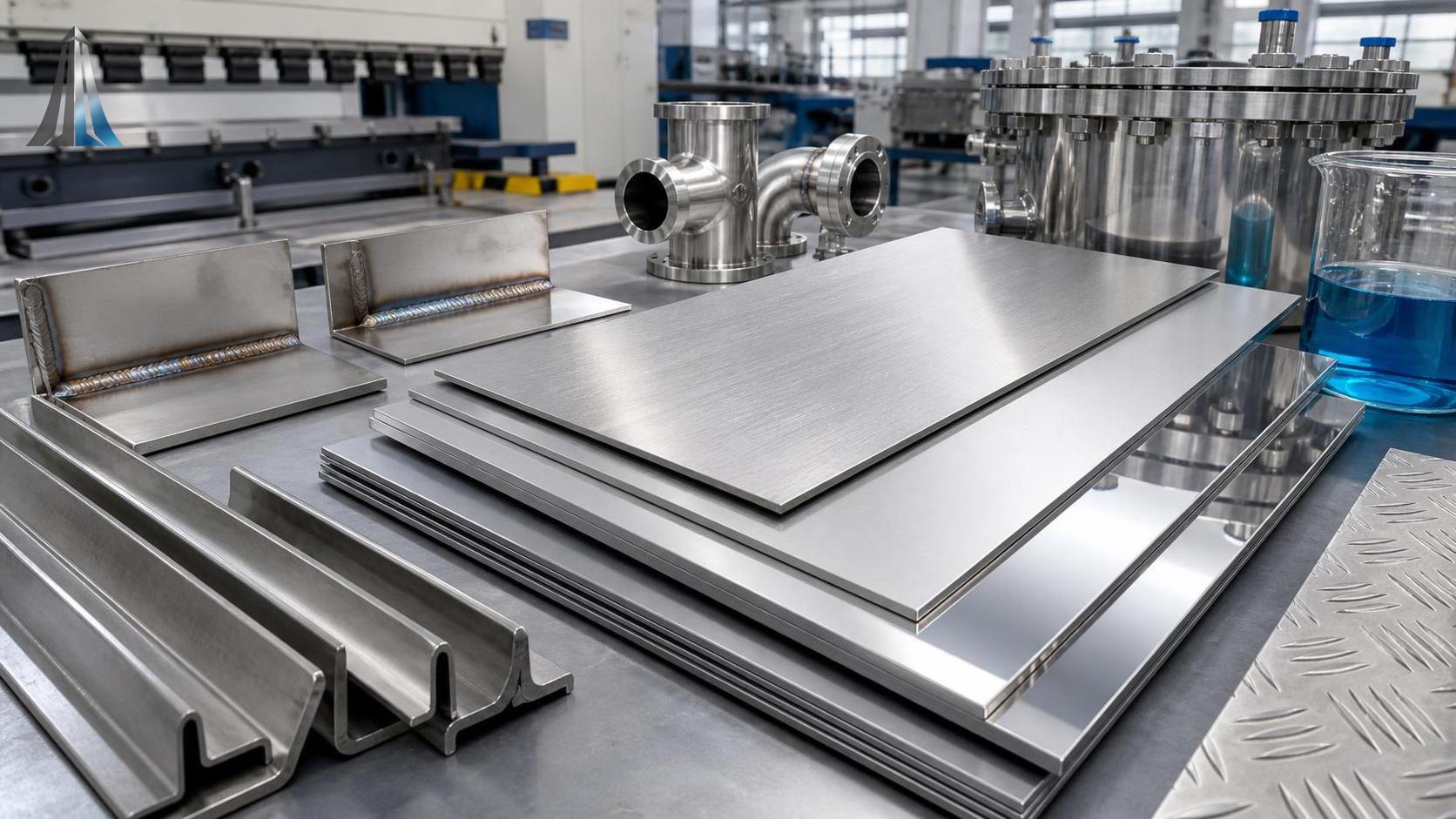
How to Choose Stainless Steel Plate Grades for Corrosion and Fabrication Needs
Choosing the right Stainless Steel Plate grade is rarely a one-line decision. Buyers usually start with corrosion resistance, but the real answer sits at the intersection of environment, fabrication method, delivery format, and total project cost. A plate that looks “better” on paper can be the wrong choice if it is difficult to cut, weld, or bend on site. On the other hand, a lower-cost grade may create maintenance problems later if the exposure conditions were underestimated.
For procurement teams, the question is not simply which grade is strongest or most expensive. It is which Stainless Steel Plate grade gives the right balance of service life, processing performance, and availability. That balance changes depending on whether the plate will be used in chemical equipment, outdoor structures, food-processing frames, marine-adjacent parts, or general fabrication work.
Start with the environment, not the catalog
Corrosion resistance is driven more by exposure than by brand names or grade familiarity. A dry indoor workshop, a coastal installation, and a tank area with chlorides are three very different situations. In procurement, it helps to ask a few practical questions early: Will the plate face rain, humidity, salt, chemicals, or repeated cleaning? Is the exposure continuous or occasional? Will surface contamination be possible during fabrication or transport?
Austenitic grades such as 304 are widely used because they cover a broad range of general-purpose applications and are relatively easy to fabricate. But 304 is not a universal answer. In harsher chloride exposure, 316 is often considered because of the added molybdenum, which improves resistance in many corrosive environments. Even then, the choice still depends on temperature, cleaning chemicals, and whether the surface will be polished, brushed, or left as mill finish.
For buyers, the cost issue is not only the unit price of the plate. A grade that resists corrosion better can reduce replacement, downtime, and surface repair work. But over-specifying can also lock in unnecessary material cost, longer lead times, and more difficult processing. The lowest apparent price is not always the lowest project cost.
Fabrication requirements can change the grade decision
Many sourcing mistakes happen when corrosion needs are considered but fabrication is treated as an afterthought. Stainless steel plate is often cut, punched, bent, and welded before it becomes a finished part. A grade that performs well in service may still create production issues if the workshop does not have the right equipment or if forming is tight.
304 and 316 are generally favored in fabrication because they offer a workable combination of formability and weldability. For many projects, that matters more than chasing the highest corrosion rating. If the design includes deep bends, repeated welding, or complex edges, the buyer should check thickness tolerance, flatness, and surface condition as closely as the grade itself. These details affect scrap rate and downstream labor cost.
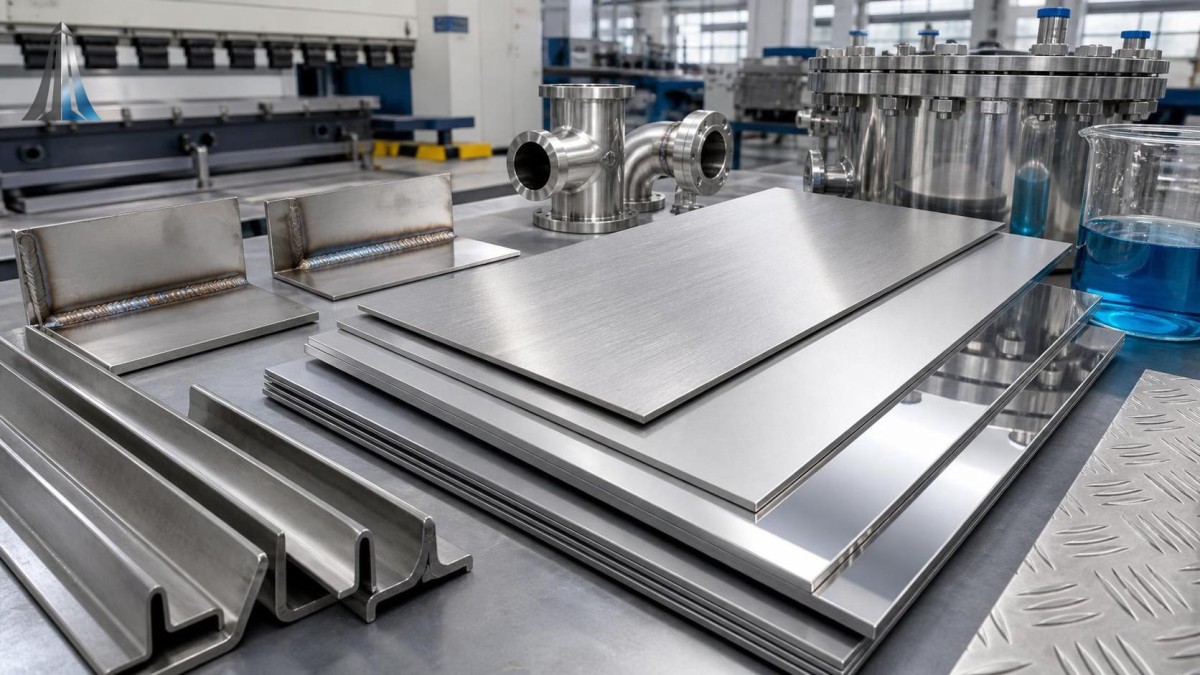
In mixed fabrication projects, the best grade is often the one that keeps processing stable. For example, a contractor may choose a more corrosion-resistant grade for exposed panels, but use a more economical option for internal components that are protected from the environment. That kind of split specification can improve cost control without weakening the whole project, provided the engineering team verifies compatibility and maintenance expectations.
What buyers should compare before placing an order
A purchasing decision becomes clearer when you compare the grade against the actual project conditions instead of comparing grades in isolation. The table below is not a rulebook, but it reflects how many buyers narrow options in real sourcing work.
Surface finish deserves more attention than it often gets. Buyers sometimes focus only on the alloy grade and overlook whether the finish matches the use case. A decorative application may need a different finish from an industrial enclosure. If the plate will be welded after delivery, finish requirements at the mill can also influence post-processing work.
Cost control is about the full sourcing picture
When procurement teams ask for stainless steel plate prices, they are usually looking for a number that can be compared quickly. That is understandable, but it can be misleading. Price per ton or per sheet does not show cutting loss, local processing cost, transport efficiency, or the risk of ordering the wrong grade. In practice, a more expensive plate can still be the cheaper choice if it reduces fabrication steps or avoids corrosion-related rework.
This is where trading and processing flexibility matter. Summit Metal Group Co., Ltd. (SMG), based in Vietnam, operates as a metal trading and processing enterprise serving foreign trade buyers across steel and non-ferrous products. Vietnam’s role as a manufacturing and logistics hub in Southeast Asia gives it an advantage for international supply chains, especially when buyers need a mix of steel products, controlled loading, and practical processing support. In projects involving stainless steel plate, the ability to arrange small-batch customization, mixed-size container loading, and value-added services such as cutting, punching, bending, and welding can help buyers reduce waste and align incoming material more closely with actual production needs.
That matters most when the order is not a standard full-container line item. Many buyers in construction, industrial fabrication, infrastructure, and architectural decoration need several sizes or specifications in one shipment. If the supplier can coordinate packing and processing around those needs, the buyer may save more on total landed cost than on nominal material price alone.
Common mistakes buyers still make
One frequent mistake is assuming all stainless steel behaves the same once it is “stainless.” It does not. Grade differences matter, and so does the working environment. Another common issue is specifying a corrosion-resistant grade but neglecting contamination during fabrication. Carbon steel contact, poor storage, or surface damage can undermine performance even if the alloy itself is correct.
A second mistake is ignoring downstream fabrication capacity. If the supplier delivers plate that is technically suitable but not well matched to the buyer’s cutting or welding setup, the project absorbs extra labor and delay. Buyers should confirm whether the order needs standard plate, cut pieces, or further processing before shipment. That conversation is easier at the quotation stage than after the container arrives.
A third mistake is treating lead time as an afterthought. Certain grades, finishes, or thickness combinations may be easy to source in one market and slower in another. For global sourcing, especially across Asia, the Middle East, Europe, and the Americas, availability can shift with mill schedules, freight conditions, and order size. A flexible supplier network can help, but buyers still need to verify delivery timing against project milestones.
A practical way to make the final choice
A good procurement decision usually comes from narrowing the problem in this order: environment, fabrication, finish, dimensions, and logistics. If corrosion exposure is mild and fabrication is complex, a workable general-purpose grade may be enough. If exposure is aggressive, corrosion performance should lead the decision even if the material cost rises. If the project depends on speed and predictable processing, availability and cut-to-size support may matter as much as alloy selection.
Before confirming an order, buyers should try to align the mill specification, the fabrication plan, and the delivery format in one round of review. That means checking grade, thickness, finish, tolerances, packing method, and any value-added processing requirements together. It also means being clear about what is negotiable and what is not. Sometimes the right answer is a premium grade. Sometimes it is a standard grade with better supply handling and smarter processing.
For stainless steel plate sourcing, the best outcome is rarely the cheapest quote on paper. It is the order that arrives with the right material behavior, the right processing readiness, and the least hidden cost. If the project details are still shifting, that is usually the moment to confirm the exact application, the exposure conditions, and whether the plate needs additional cutting or forming before shipment. Those three points often determine whether the purchase works smoothly or becomes expensive later.
Recent Articles
 How to Choose Stainless Steel Plate Grades for Corrosion and Fabrication Needs
 Cold Rolled Steel Plate: Key Selection Criteria for Forming and Surface Finish
 When Wear Resistant Steel Plate Lowers Maintenance Cost in Mining
 Pressure Vessel Steel Plate Standards That Matter for Export Orders
 What Causes Surface Cracks in Steel Wire Rod During Rolling
 How to Choose Duplex Stainless Steel Pipe for Chloride Service
Please give us a message