
News Center
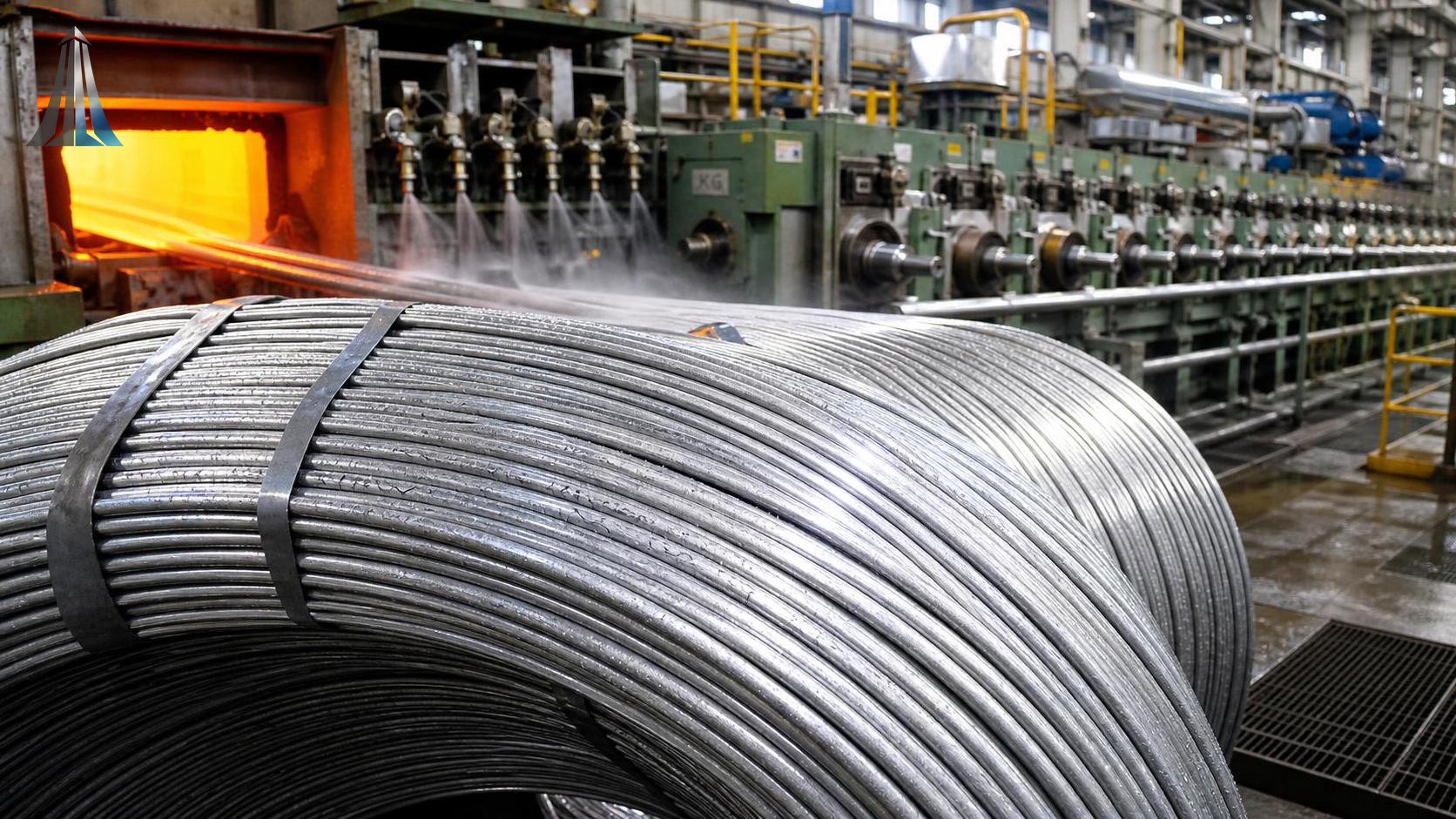
Surface cracks in Steel Wire Rod during rolling are rarely caused by one isolated mistake. In most plants, they result from a chain of problems involving billet condition, reheating practice, rolling parameters, guide wear, cooling control, and inspection discipline.
For quality control and safety managers, the practical question is not only why cracks appear, but how to identify the dominant cause quickly enough to prevent repeated defects, scrap, customer claims, and operating risk.
This article explains the most common reasons for surface cracking in Steel Wire Rod during rolling, how to distinguish one cause from another, and what actions typically improve stability in daily production.
What Quality and Safety Teams Need to Judge First
When surface cracks appear on Steel Wire Rod, the first judgment should be whether the defect originated before rolling, formed during deformation, or opened visibly only after cooling and inspection.
This distinction matters because many mills waste time adjusting rolling speed or guides when the real source is billet chemistry, casting defects, or overheating in the furnace.
From a quality perspective, cracks reduce surface integrity, fatigue performance, drawability, and downstream forming reliability. From a safety perspective, unstable rolling conditions linked to cracking often signal poor control that may also increase cobbles, unplanned stops, and operator exposure.
That is why root cause analysis should begin with process evidence across the full line, not with a single visual check at the finishing stage.
The Most Common Root Cause: Poor Billet Surface and Internal Soundness
One of the leading causes of surface cracks in Steel Wire Rod is defective billet input. If the billet already contains surface seams, corner cracks, scabs, laps, pinholes, or subsurface defects, rolling can elongate and expose them.
In practice, the final rod often makes these original defects easier to see because deformation stretches the flawed area into a longer, sharper discontinuity.
Continuous casting quality has a direct effect here. Mold fluctuation, uneven secondary cooling, improper powder behavior, and strand bending stress can all leave the billet surface vulnerable before it even reaches the rolling mill.
Billet conditioning is equally important. If scarfing, grinding, or inspection standards are inconsistent, marginal material enters production and later appears as a rolling defect, even though the mill itself may not be the primary source.
Quality teams should compare crack orientation, depth, and continuity with billet records. Longitudinal defects that follow rolling direction often point back to pre-existing billet imperfections.
Temperature Control Problems Often Turn Minor Defects into Visible Cracks
Even when billet quality is acceptable, poor heating practice can trigger or worsen surface cracking. Steel becomes more vulnerable when temperature distribution is uneven across the section or along billet length.
Overheating is especially dangerous because it can promote grain coarsening, surface oxidation, and local weakening. Once the material enters high strain zones, the weakened surface may open into cracks.
Underheating creates a different problem. If the billet surface or core is too cold, deformation resistance rises, rolling load increases, and local strain may exceed what the surface can accommodate cleanly.
Temperature non-uniformity is often more damaging than the absolute setpoint. A billet with a hot outer layer and colder core, or one end hotter than the other, deforms unevenly and can crack under unstable stress distribution.
For Steel Wire Rod mills, furnace residence time, burner balance, skid mark effects, descaling efficiency, and transfer delays should all be reviewed when crack rates rise unexpectedly.
Excessive Oxide Scale and Poor Descaling Damage the Surface
Surface cracks are not always pure metallurgical fractures. In some cases, thick scale and poor descaling create mechanical surface damage that either resembles cracks or becomes a starting point for real cracking during later passes.
If scale is heavy and adherent, it may be pressed into the surface during rolling. This can form laps, folded defects, and stress concentrators that open during further deformation.
High-temperature oxidation also removes sound metal from the surface. That reduction in effective surface quality becomes critical when the rod is rolled at high speed through multiple stands.
Water pressure, nozzle alignment, maintenance condition, and descaling timing all influence whether scale is removed effectively before significant deformation occurs.
When operators find irregular surface marks together with cracks, the plant should not assume the defect is only a guide issue. Descaling history and scale condition must be checked as part of the investigation.
Incorrect Pass Design and Reduction Distribution Create Localized Strain
Rolling design itself can generate surface cracks when reduction is too aggressive in certain passes or poorly distributed through the sequence of stands.
If one stand imposes excessive local deformation, especially on a surface already weakened by temperature variation or scale, the outer layer may fail before the metal flows uniformly.
Improper groove design can also produce sharp contact zones, uneven spread, corner overfilling, and unstable entry conditions. These factors raise tensile stress near the surface where cracks are most likely to initiate.
In rod mills, high-speed finishing makes consistency even more important. Small deviations in stock shape from earlier stands can become amplified, leading to repeated surface defects at the same positions.
Quality managers should review pass schedule changes, roll wear records, and defect frequency by size and grade. A defect limited to specific dimensions often indicates a rolling design or setup issue rather than a general metallurgy problem.
Guide Misalignment, Worn Rolls, and Mechanical Instability Are Frequent Contributors
Many recurring cracks in Steel Wire Rod are tied to equipment condition. Worn guides, damaged rolls, eccentric rotation, vibration, and poor alignment can scratch, pinch, or distort the hot surface.
These mechanical disturbances may first appear as shallow marks, but under continued reduction they can develop into open cracks or folded surface defects.
Entry and exit guides deserve particular attention because misalignment changes bar position and causes uneven metal flow into the groove. That creates localized pressure and tensile stress at the surface.
Roll wear is another common hidden factor. As grooves lose their intended geometry, contact conditions change, reduction becomes less predictable, and the rod surface experiences non-uniform deformation.
From a safety standpoint, mechanical instability is not only a quality concern. The same instability that produces surface defects may also increase the risk of cobbles, sudden line interruptions, and hazardous manual intervention.
Steel Chemistry and Grade Sensitivity Cannot Be Ignored
Not all grades behave the same during rolling. Certain steel chemistries are more sensitive to high-temperature brittleness, segregation, or narrow hot-working windows.
Higher carbon content, residual elements, sulfur levels, phosphorus, and microalloy additions can affect ductility during rolling. If process settings are copied from one grade to another without adjustment, cracks may appear even when the equipment is sound.
Copper and tin residues, for example, can contribute to hot shortness under oxidizing conditions. Sulfur-related inclusions may weaken local areas, especially when shape control and temperature are already marginal.
This is why quality teams should analyze defect trends by grade, heat, and supplier source. A crack problem concentrated in certain chemistries usually points to a combined metallurgy and process control issue.
Material certificates alone are not enough. Correlation between chemistry, reheating curve, rolling load, and defect rate provides a much stronger basis for corrective action.
Improper Cooling After Rolling Can Reveal or Worsen Surface Cracks
Some defects seem to originate in rolling but actually become visible only during controlled cooling or coil handling. Rapid or uneven cooling can intensify thermal stress at the surface.
If the rod exits the finishing block with variable temperature and then enters uneven cooling conditions, the surface may contract differently from the core, making latent defects more obvious.
For certain grades, cooling practice also affects microstructure, decarburization behavior, and residual stress. These factors influence whether small surface discontinuities remain harmless or develop into unacceptable cracks.
Quality and safety teams should review laying head performance, water distribution, Stelmor conveyor conditions, ring formation, and coil compactness when cracks are observed after cooling rather than immediately at the mill exit.
How to Distinguish the Likely Cause in Daily Production
A useful investigation starts with three observations: defect appearance, defect location, and process repeatability. These clues often narrow the cause faster than broad discussion.
If cracks are longitudinal and consistent across many coils from one heat, billet quality or chemistry should be examined first. If they appear intermittently and match stand position changes, mill mechanics become more likely.
If defects cluster by shift or furnace campaign, temperature control and descaling deserve attention. If they occur only in one size or pass schedule, reduction distribution and groove condition should be reviewed.
Macro-etch testing, metallographic examination, billet traceability, surface grinding checks, and process data comparison are all practical tools for separating inherited defects from rolling-induced defects.
The goal is not to collect every possible data point. It is to connect defect morphology with the most probable process stage and then confirm with targeted evidence.
Practical Prevention Measures That Usually Deliver Results
For most operations, crack reduction comes from tighter discipline rather than one dramatic change. The strongest results usually come from controlling billet acceptance, heating uniformity, descaling, and equipment condition together.
Start by strengthening billet inspection and conditioning standards. Material with visible surface defects, suspect corners, or poor casting history should be isolated before rolling.
Next, verify furnace practice with actual temperature mapping instead of relying only on setpoints. Consistent soaking, minimized transfer delay, and controlled oxidation can significantly improve Steel Wire Rod surface quality.
Rolling teams should monitor guide alignment, roll wear, pass fill, vibration, and stand load trends as routine quality indicators, not only as maintenance concerns.
For grade-sensitive products, establish rolling and cooling windows by chemistry family. This reduces the risk of applying a general process to steels with different ductility behavior.
Finally, create a defect feedback loop between casting, reheating, rolling, inspection, and customer complaint analysis. Surface crack prevention is strongest when each stage shares responsibility instead of treating defects as someone else’s problem.
Why This Matters Commercially as Well as Operationally
For companies serving construction, fabrication, infrastructure, and industrial buyers, surface quality in Steel Wire Rod is more than a technical metric. It affects downstream trust, processing yield, and claims exposure.
Customers using rod for drawing, forming, welding, or reinforcement expect stable behavior. Surface cracks increase the chance of breakage, rework, rejection, and damaged confidence in supply consistency.
For trading and processing enterprises such as Summit Metal Group Co., Ltd., stable quality control also supports supplier evaluation, product matching, and reliable service to international clients who need predictable performance across batches.
That commercial value is closely tied to plant discipline. Better defect prevention improves not only output quality, but also delivery reliability and the credibility of the full supply chain.
Conclusion
Surface cracks in Steel Wire Rod during rolling usually come from a combination of billet quality, reheating control, scale management, rolling design, mechanical condition, steel chemistry, and cooling practice.
For quality control and safety managers, the most effective approach is to identify where the defect truly begins, then act on the few process variables that have the strongest evidence behind them.
When plants treat cracking as a system problem instead of a single-stand problem, they reduce scrap, improve downstream performance, lower operational risk, and build a more consistent product for demanding industrial markets.
Recent Articles
 How to Choose Stainless Steel Plate Grades for Corrosion and Fabrication Needs
 Cold Rolled Steel Plate: Key Selection Criteria for Forming and Surface Finish
 When Wear Resistant Steel Plate Lowers Maintenance Cost in Mining
 Pressure Vessel Steel Plate Standards That Matter for Export Orders
 What Causes Surface Cracks in Steel Wire Rod During Rolling
 How to Choose Duplex Stainless Steel Pipe for Chloride Service
Please give us a message