
News Center
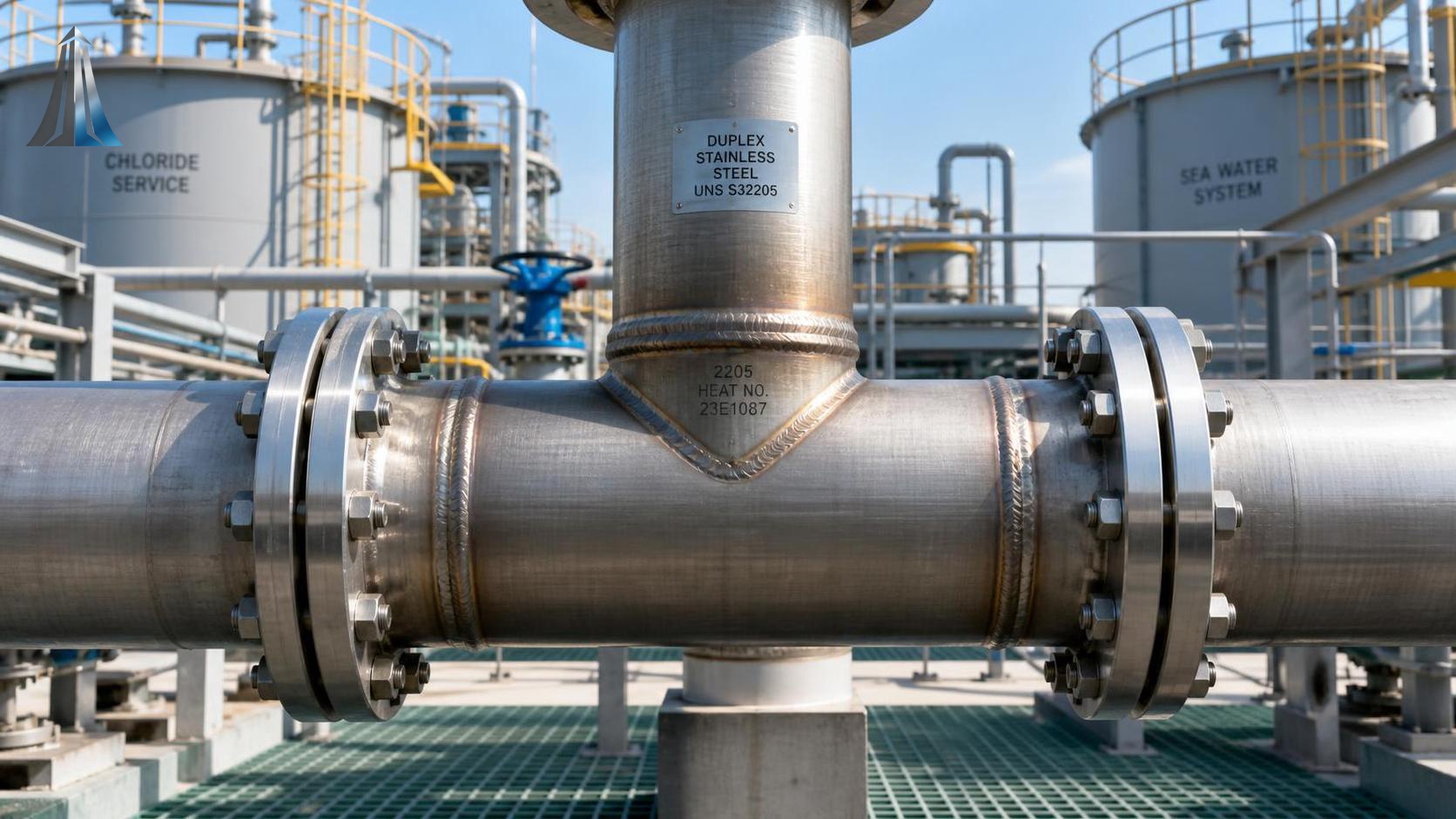
Choosing Duplex Stainless Steel Pipe for chloride service is rarely a matter of picking the highest grade you can afford. In real projects, the right decision usually comes down to matching the pipe to the actual chloride load, operating temperature, fabrication route, and inspection standard. If those factors are not checked together, a pipe that looks acceptable on paper can still fail early through pitting, crevice corrosion, stress corrosion cracking, or poor weld performance. The practical question is not simply “is duplex good in chloride service?” but “which duplex pipe is suitable for this exact duty, and what conditions could make it a bad choice?”
A short answer first: for chloride-bearing service, duplex stainless steel is often selected because it offers better resistance to chloride-induced corrosion and higher strength than common austenitic grades such as 304 or 316. But duplex is not automatically safe in every chloride environment. Chloride concentration, temperature excursions, stagnant zones, oxygen conditions, weld quality, and surface finish all change the outcome. Selection should start with the service envelope, not with price or grade name alone.
Start with the service conditions, not the material brochure
This is where many evaluations drift off course. A data sheet may say a certain duplex grade has good chloride resistance, but that statement only makes sense within a specific operating window. Before comparing pipe options, pin down the conditions that will actually govern corrosion behavior:
- Chloride concentration in normal and upset conditions
- Operating and design temperature
- Pressure and flow regime
- Continuous service or intermittent shutdown
- Presence of deposits, solids, or stagnant zones
- pH and oxidizing or reducing conditions
- Cleaning method, especially chemical cleaning or chlorinated washdown
In day-to-day evaluation work, the biggest mistake is using only the “normal” operating condition. Chloride systems often become more aggressive during shutdown, low-flow periods, warm standing conditions, or concentration cycles. A line carrying moderate chlorides at low temperature may be manageable, while the same line after evaporation, heat-up, or poor drainage may become much harder on the pipe.
That is why experienced buyers usually ask one extra question early: what is the worst realistic condition the line will see, even if only occasionally? That answer often changes the grade decision.
Not all duplex grades solve the same problem
When people say duplex stainless steel, they sometimes treat it as one material family with one performance level. It is not. Lean duplex, standard duplex, and super duplex occupy different positions in terms of corrosion resistance, strength, and cost.
Lean duplex can be attractive when strength matters and the chloride environment is relatively moderate. It may work well in some utility, structural, or mildly aggressive process applications, but it should not be treated as a low-cost shortcut for severe chloride service.
Standard duplex, such as the grades commonly used as a step up from 316L, is often a sensible middle ground. It gives improved resistance to chloride-related attack and a good strength-to-weight ratio. For many industrial systems, this is where the evaluation starts.
Super duplex is typically considered when chloride concentration is high, temperatures are elevated, or reliability expectations are unforgiving. Seawater-related duties, aggressive brines, and some offshore or chemical processing environments often push evaluation in this direction, though final selection still needs confirmation against actual process details and applicable standards.
The point is simple: do not ask whether duplex is enough. Ask which duplex level matches the corrosion risk with a reasonable margin.
Temperature changes the decision faster than many expect
In chloride service, temperature is often the detail that turns a comfortable selection into a risky one. A pipe grade that performs well in cool service may face much higher pitting or crevice corrosion risk once the temperature rises. This matters especially in heat exchangers, hot process lines, cleaning cycles, and systems exposed to sun-heated or poorly ventilated outdoor conditions.
It is common to see a specification built around chloride ppm alone. That is incomplete. Chloride concentration without temperature tells only half the story.
When reviewing a proposed Duplex Stainless Steel Pipe, check whether the supplier or internal engineering team has considered the actual metal temperature, not only the fluid temperature in steady state. Local hot spots, tracing, nearby heat sources, and low-flow conditions can shift the corrosion picture.
Welded pipe versus seamless pipe is not a minor detail
For chloride service, manufacturing route matters because weld integrity and heat-affected-zone control influence corrosion performance. Duplex stainless steels are more sensitive to fabrication discipline than many buyers first assume. Poorly controlled welding can disturb phase balance and reduce corrosion resistance, even if the base material chemistry is correct.
That does not mean welded pipe is unsuitable. In many applications, properly manufactured and tested welded duplex pipe performs well. But technical evaluation should include more than a generic statement of compliance. Review these points carefully:
- Whether the pipe is seamless or welded, and why that route was chosen
- Applicable manufacturing standard
- Heat treatment condition
- Weld procedure qualification and inspection scope
- NDT requirements
- Pickling, passivation, and final surface condition
If the line is highly sensitive, the conversation should also cover traceability and mill documentation. Many service failures blamed on “bad duplex” are really fabrication or finishing problems.
Corrosion resistance is broader than pitting resistance
A lot of selection discussions stop at PREN or a general statement about pitting resistance. That is useful, but incomplete. Chloride service can involve several damage modes, and the controlling mechanism depends on geometry and operation.
Pitting corrosion matters in exposed surfaces, especially where chlorides and oxidizing conditions combine.
Crevice corrosion becomes critical around gaskets, threaded areas, deposits, supports, flange faces, and poorly drained sections. In practice, this is often more relevant than buyers expect because real piping systems are full of crevice-like conditions.
Chloride stress corrosion cracking is one reason duplex is considered over some austenitic grades, but resistance is not a free pass. Residual stress, temperature, and local chemistry still matter.
Erosion-corrosion or under-deposit attack can also be the real issue in high-velocity or solids-bearing service.
So when comparing pipe options, match the material not just to “chlorides” in general, but to the most likely corrosion mechanism in that line.
Pay attention to the system design around the pipe
Selection is not only a metallurgy decision. A good pipe choice can still underperform in a poor system layout. Dead legs, low points that trap brine, poor drainage, rough internal finish, and gasket designs that create tight crevices can all shorten service life.
This is one of the more practical judgment points in an evaluation: if the system design is known to create stagnant conditions, you may need a more resistant duplex grade than the bulk fluid chemistry alone would suggest. On the other hand, a well-drained, clean, smoothly fabricated system may allow a more balanced specification.
That is also why “replace 316 with duplex everywhere” is not a serious selection strategy. Some lines need a different grade; some need better design detail; some may need a non-metallic or higher-alloy solution if the environment is especially severe.
Do not ignore availability, lead time, and documentation quality
Technical evaluators usually know that the best theoretical material is not always the best project decision. Pipe has to be available in the required size range, wall thickness, standard, and documentation package. If supply is inconsistent, replacement and project scheduling become part of the risk profile.
For international sourcing, practical support matters: mill certificates, inspection records, origin control, dimensional consistency, and coordination across processing and logistics. This is one area where a capable supply partner can reduce friction, especially when the project involves mixed metal packages rather than duplex pipe alone. Summit Metal Group Co., Ltd. (SMG), based in Vietnam, operates as a metal trading and processing supplier serving global buyers across steel and non-ferrous product categories. For buyers already coordinating structural steel, galvanized products, aluminum, and other materials, working with a supplier that understands export documentation and regional logistics can simplify procurement, even though the final duplex selection still needs to be driven by service conditions and technical compliance.
Common mistakes that lead to poor duplex pipe selection
Some mistakes show up again and again:
- Choosing by price difference between 316L and duplex without defining corrosion risk
- Using chloride content alone and ignoring temperature
- Assuming all duplex grades have similar performance
- Reviewing base metal chemistry but not weld quality
- Ignoring stagnant zones, deposits, and shutdown conditions
- Overlooking required testing, certification, or surface treatment
Another quiet problem is specifying a high-grade pipe in a system where flanges, fittings, supports, or fabrication practices are left at a lower control level. The pipe itself may be fine, but the weak point appears somewhere adjacent. Selection should be made at the system level.
A practical way to make the final decision
If you need a working approach, keep it simple and disciplined.
First, define the real process envelope, including upset and cleaning conditions. Second, identify the likely corrosion mode, not just the presence of chlorides. Third, compare duplex grade levels based on that duty. Fourth, confirm manufacturing route, welding controls, inspection scope, and finish requirements. Fifth, check supply practicality: dimensions, lead time, traceability, and documentation.
If two options still look close, the better choice is usually the one that gives a clearer corrosion margin and a more controllable fabrication outcome, not merely the lower purchase price. In chloride service, lifecycle cost is often decided by failure avoidance, shutdown prevention, and inspection confidence.
That is the real selection mindset for Duplex Stainless Steel Pipe: buy enough corrosion resistance for the actual service, make sure fabrication quality supports the metallurgy, and do not separate technical suitability from supply execution.
FAQ
Is duplex stainless steel always better than 316L in chloride service?
No. It is often better, especially where chloride-related corrosion risk is a concern, but the outcome depends on temperature, concentration, fabrication quality, and system design. In mild service, the upgrade may not be necessary. In severe service, standard duplex may still be insufficient.
When should super duplex be considered instead of standard duplex?
Usually when chlorides are high, temperatures are elevated, crevice conditions are difficult to avoid, or failure consequences are severe. The exact cutover point needs review against process conditions and applicable engineering standards.
Is welded duplex pipe risky for chloride applications?
Not inherently. The key issue is manufacturing and welding control. Properly produced welded duplex pipe with suitable heat treatment, testing, and surface finishing can perform well. Poor weld quality is the risk, not the welded form by itself.
What should be checked before sending an RFQ?
At minimum: chloride level, temperature range, pressure, flow condition, expected deposits or stagnation, applicable standard, required pipe form, inspection scope, and documentation requirements.
Can I choose duplex pipe mainly for its higher strength?
You can use the strength advantage in design, but for chloride service that should never be the only reason. Corrosion behavior and fabrication quality still control long-term suitability.
Internal Link Anchor Text Suggestions
- Duplex stainless steel vs 316L for chloride environments: comparison page or technical blog
- How to evaluate stainless steel pipe corrosion resistance: material selection guide
- Welded vs seamless stainless steel pipe: specification and application guide
- Pipe material selection for seawater and brine service: industry solution page
- Mill test certificates and inspection requirements for steel pipe: QA documentation page
External Source Directions
- ASTM or ASME material and pipe specification documents
- Corrosion guidance from recognized industry associations or engineering institutes
- Official technical datasheets from established duplex stainless steel producers
Recent Articles
 How to Choose Stainless Steel Plate Grades for Corrosion and Fabrication Needs
 Cold Rolled Steel Plate: Key Selection Criteria for Forming and Surface Finish
 When Wear Resistant Steel Plate Lowers Maintenance Cost in Mining
 Pressure Vessel Steel Plate Standards That Matter for Export Orders
 What Causes Surface Cracks in Steel Wire Rod During Rolling
 How to Choose Duplex Stainless Steel Pipe for Chloride Service
Please give us a message